
December 6th, 1917
” The windows in our house shook”- John A. MacKay.
That house was my father’s childhood home on the shoreline of the Bras d’Or lake in the village of West Bay, on Cape Breton island, in the province of Nova Scotia. Almost 300 km away from where the blast occurred.
I’m not a historian but my dad’s story of the Halifax Explosion has lingered in my memory all my life and has inspired me to seek out locations tied to the disaster. I started gathering information back in 2017 for the hundredth anniversary of the explosion. My first effort was to read the book Barometer Rising by Hugh MacLennan.
The author showed the day-to-day lives of a few characters living in and around the port city of Halifax during World War I, letting us feel their ambitions, love interests, hopes and fears and the complete discontinuation of life as they knew it, following the collision between the French steamship the Mont Blanc and Norwegian relief ship the IMO.
This book added layers to what my dad had told me; that regular citizens had been just starting their day, arriving at work, cleaning up breakfast dishes, heading to the market, or talking with neighbors after sending their children off to school. Most probably heard or witnessed the collision between the ships in the Narrows. They stopped in their tracks, mesmerized by the fire ignited on the deck of the Mont Blanc, as she slowly drifted toward the Halifax north shore.
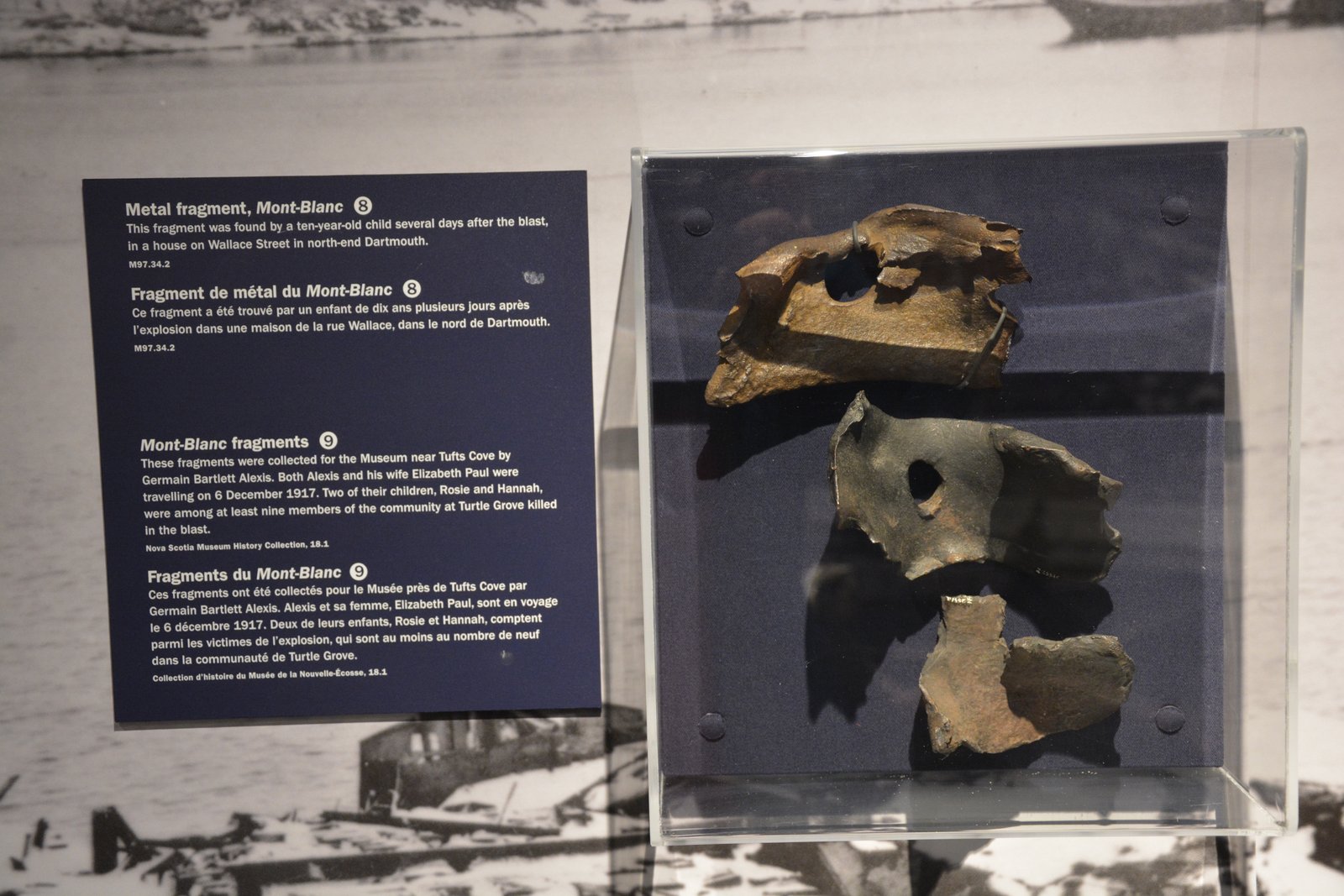
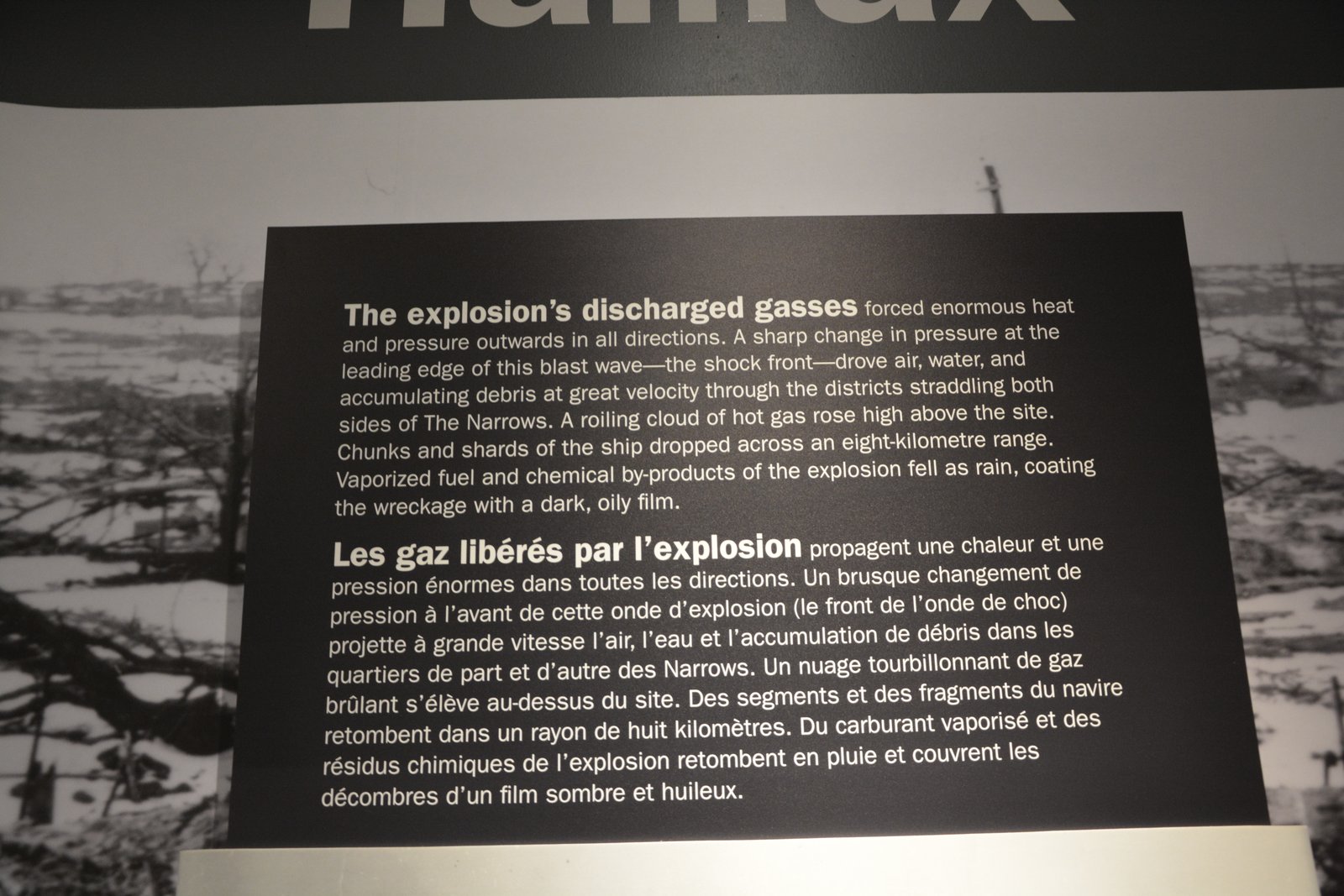
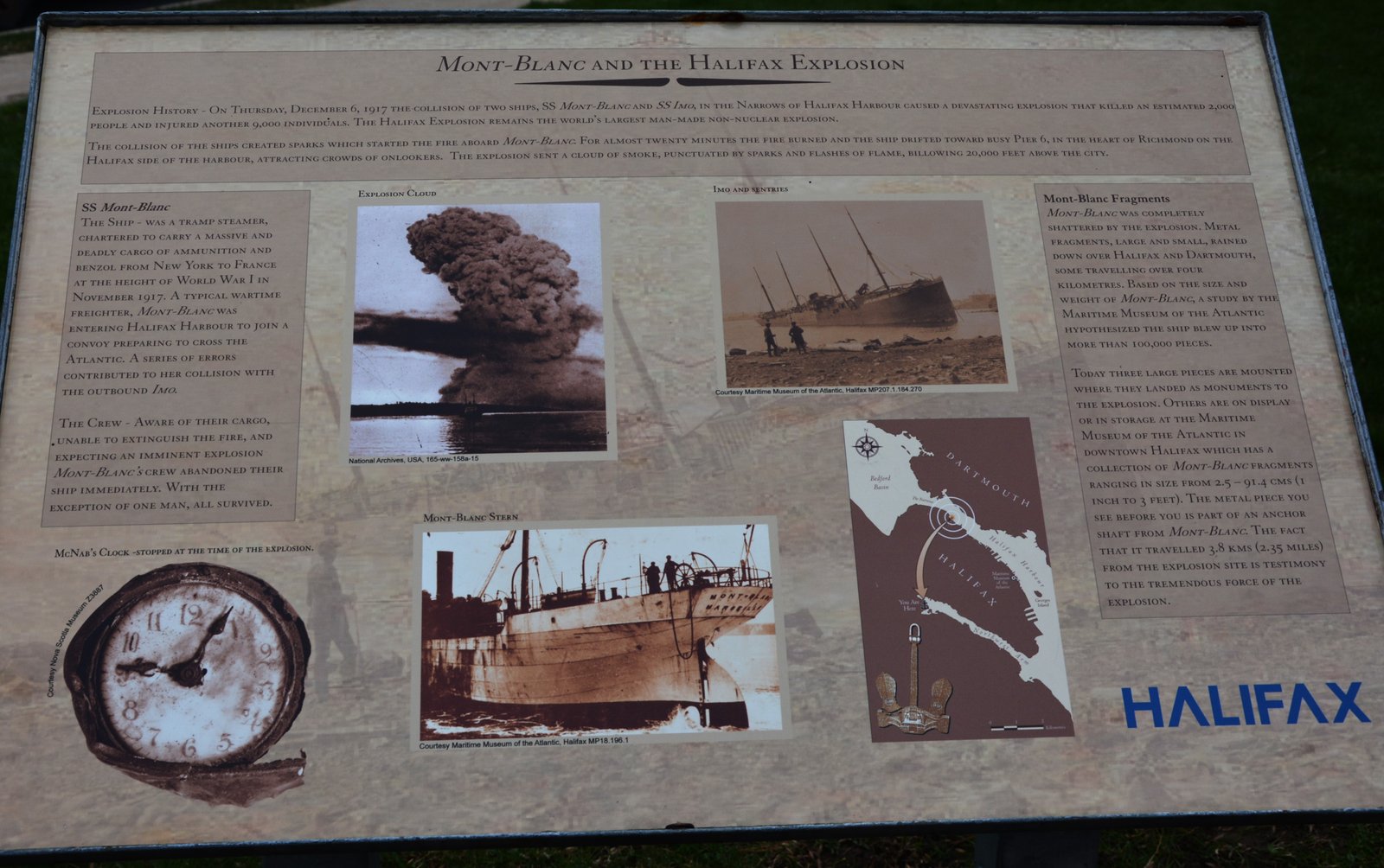
Unbeknownst to the throngs of people watching, the Mont Blanc was loaded down with explosives bound for France, to help in the war effect. That fire on the deck was the fuse to a cargo hold full of TNT. The Mont Blanc exploded into smithereens, creating a shock-wave, and a plume of gas that hurled metal fragments onto shore, leveling everything in its path: homes, businesses, buildings, trees and of course the onlookers themselves. The North End of Halifax was demolished and more than 1900 people died; another 9000 were left homeless.*
My research required multiple road trips to Halifax. My first stop was the Maritime Museum of the Atlantic. I saw display cases filled with hunks of twisted metal, frames with black and white photos showing the complete annihilation of the cityscape. The Halifax Explosion was the largest man-made explosion prior to the dropping of the atomic bomb.*
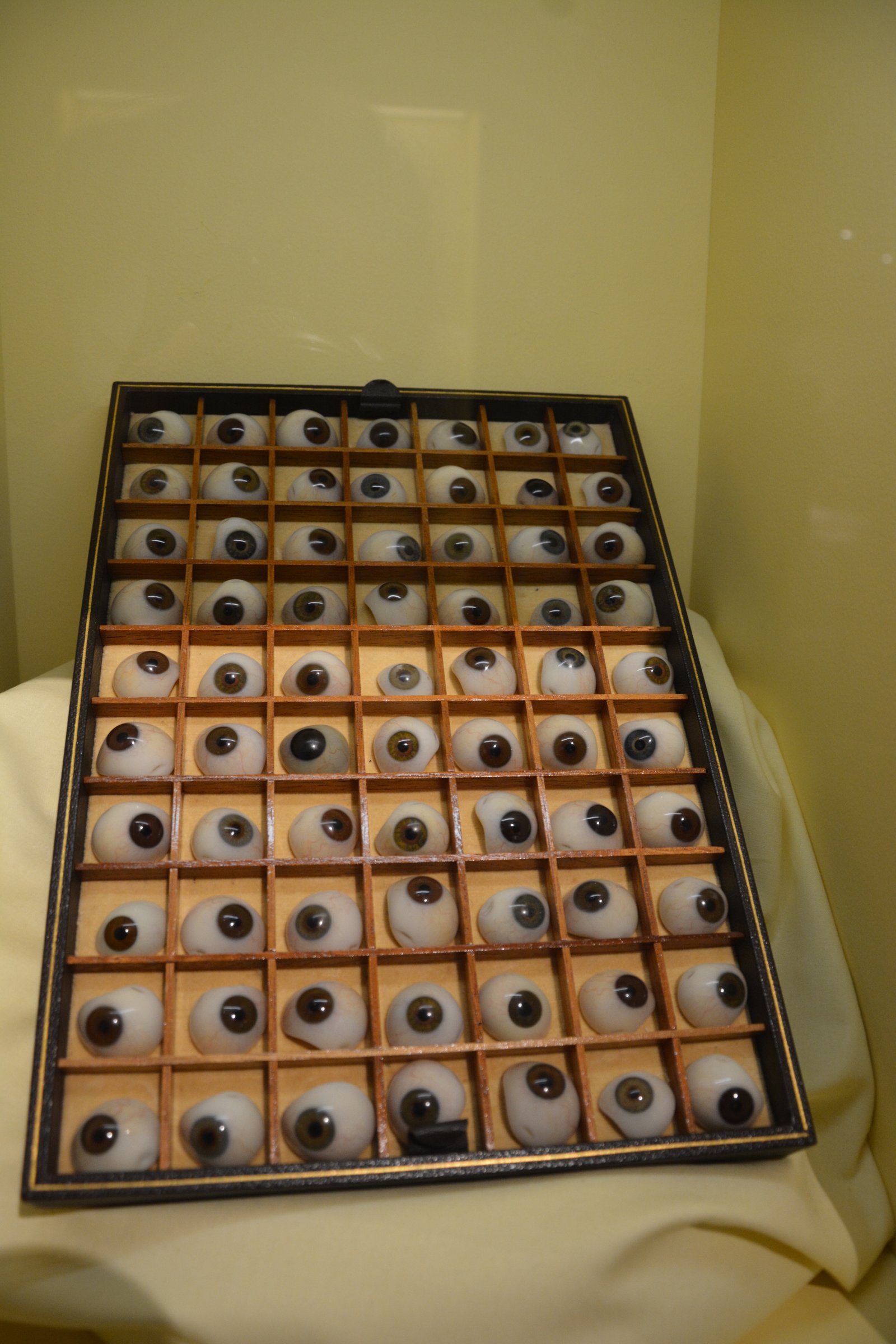
Of the few details my dad gave me, the references to the shaking of the windows was the most poignant, because I also learned that the explosion would be the last thing that more than 1000 people would have seen. Shards of glass and other projectiles, exploded through windows, penetrating whatever and whomever was there to absorb the blast. I read in a piece on-line that it was the largest mass blinding in Canadian history leading to the formation of the CNIB, (Canadian National Institute for the Blind.)*
In the aftermath of the explosion, transportation in and out of the area was impossible and to make matters worse, an untimely blizzard arrived the following day, burying everything in snow and delaying rescue efforts. Many people who survived the explosion were trapped under rubble and died of exposure. I can’t even image the hardship.
To this day Nova Scotia sends a Christmas tree to the city of Boston to show gratitude for their assistance in the recovery effort. On a recent trip to Boston, I went on a Duck tour of the Harbour. The guide asked everyone where they were from. I said “Nova Scotia.” He immediately mentioned the annual gift of the Christmas tree. It may be more than a hundred years since the disaster but I was glad to hear the story has been kept alive outside of Nova Scotia.
So where else can you get a feel for the Halifax explosion? Here is a list of locations to check out should you be interested in following the trail yourself.
- Maritime Museum of the Atlantic, 1675 Lower Water street. It is was a great place for me to start getting the facts and the timeline of the event. I also learned about the heroes and heroines who selflessly scarified themselves for the good of others. Train dispatcher Vincent Colman was one of them. He send a telegram message warning an incoming train of the imminent explosion. He saved a lot of lives in his final moments. You will find The Halifax Explosion right before the RMS Titanic exhibit. You can’t miss it.
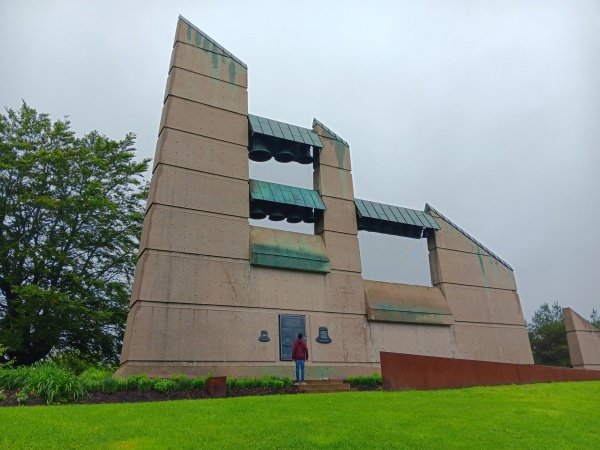
2. Fort Needham Memorial Bell Tower. 3340 Union St, Halifax, NS B3K 5H1
Originally a fortification on the highest point in the area- Pedley’s Hill. It became known as Fort Needham sometime after 1759 during the American revolution and the Napoleonic wars. Once the tensions eased, the fort fell into disrepair. Fort Needham park was established in the 1950s as part of the revitalization of the area. The memorial Bell Tower was built on the location in 1985. The park was renovated again for the 100th anniversary of the explosion in 2017. There is a pathway leading up to the monument that is flanked with steel beams engraved with information about the S.S. Mont Blanc and the S.S. IMO; dates, ship information, crew etc. There is a memorial service held here every December 6th marking the event.
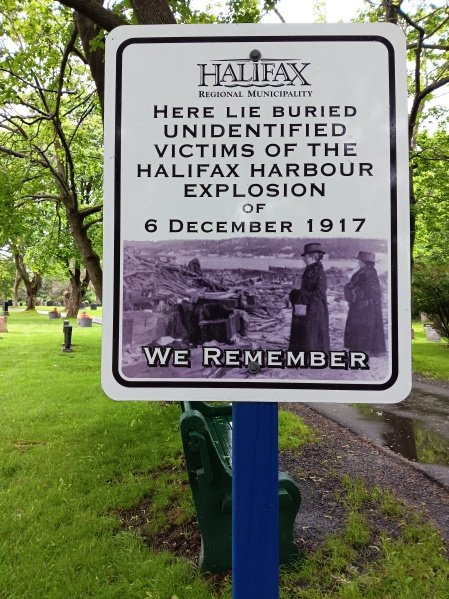
3. Fairlawn Cemetery Bayer’s Road entrance is the point closest to the gravesite.
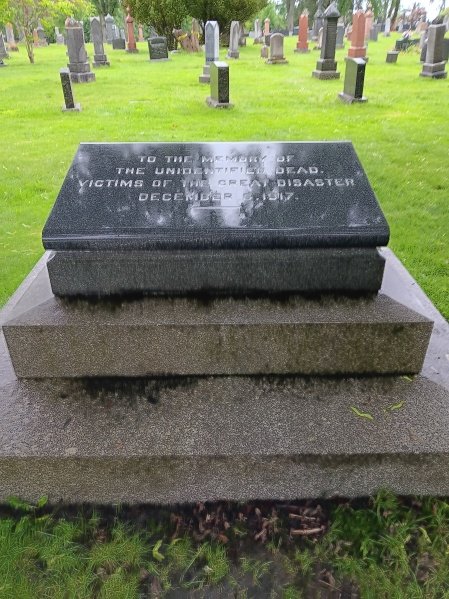
The sign is right on the driving path that surrounds the cemetery, off Bayers Road. Here lie buried unidentified victims of the Halifax Harbour explosion 6th December 1917. We remember. 125 person where laid to rest here killed from the blast.
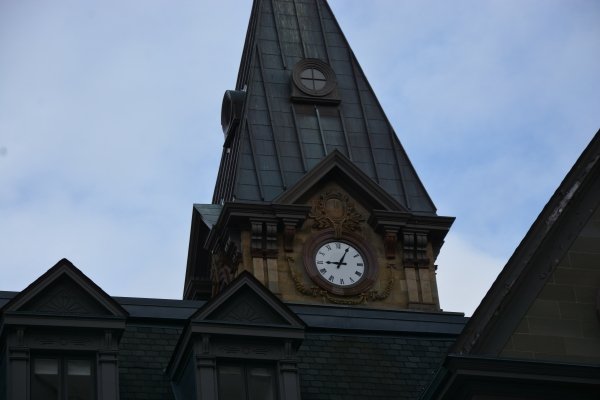
4. City Hall -Tower Clock. 1841 Argyle street. Halifax.
This clock is a replica of the one that was stopped at the exact moment of the explosion. It is a memorial left to remember the 1900 that died and more than 9,000 people injured and impacted by the explosion. It is permanently showing 09:04.35 a.m., marking the time of the blast.
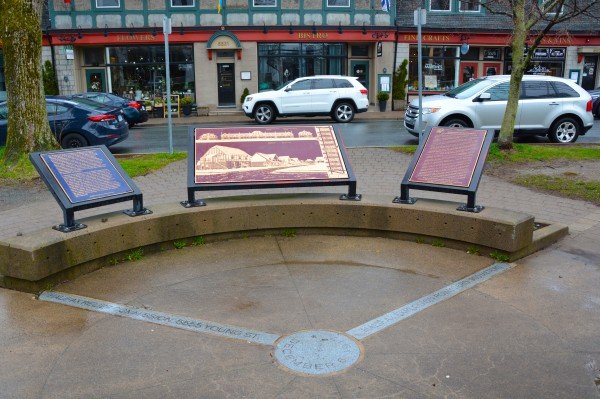
5. Hydrostone Neighborhood Young St, Halifax.
The blast zone radius: metal lines etched in the ground show the north and south line of the wreckage where the city was destroyed. The neighbourhood is a National Historic Site. It was rebuilt using latest town planning guidelines of the time, to provide housing for the displaced survivors of the explosion. It was completed in 1920. Most of the dwellings were built to be fireproof and set in the English Garden style, by designers Ross and MacDonald and planner Thomas Adams,
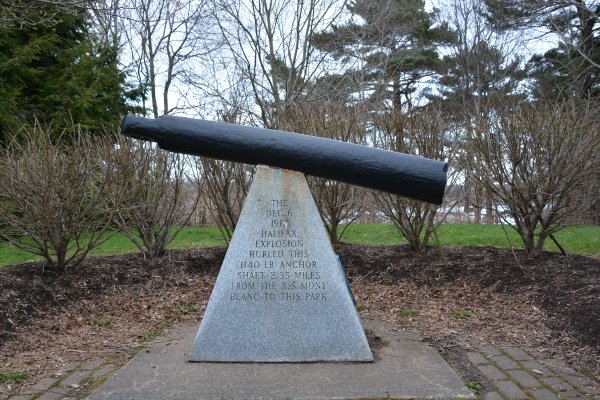
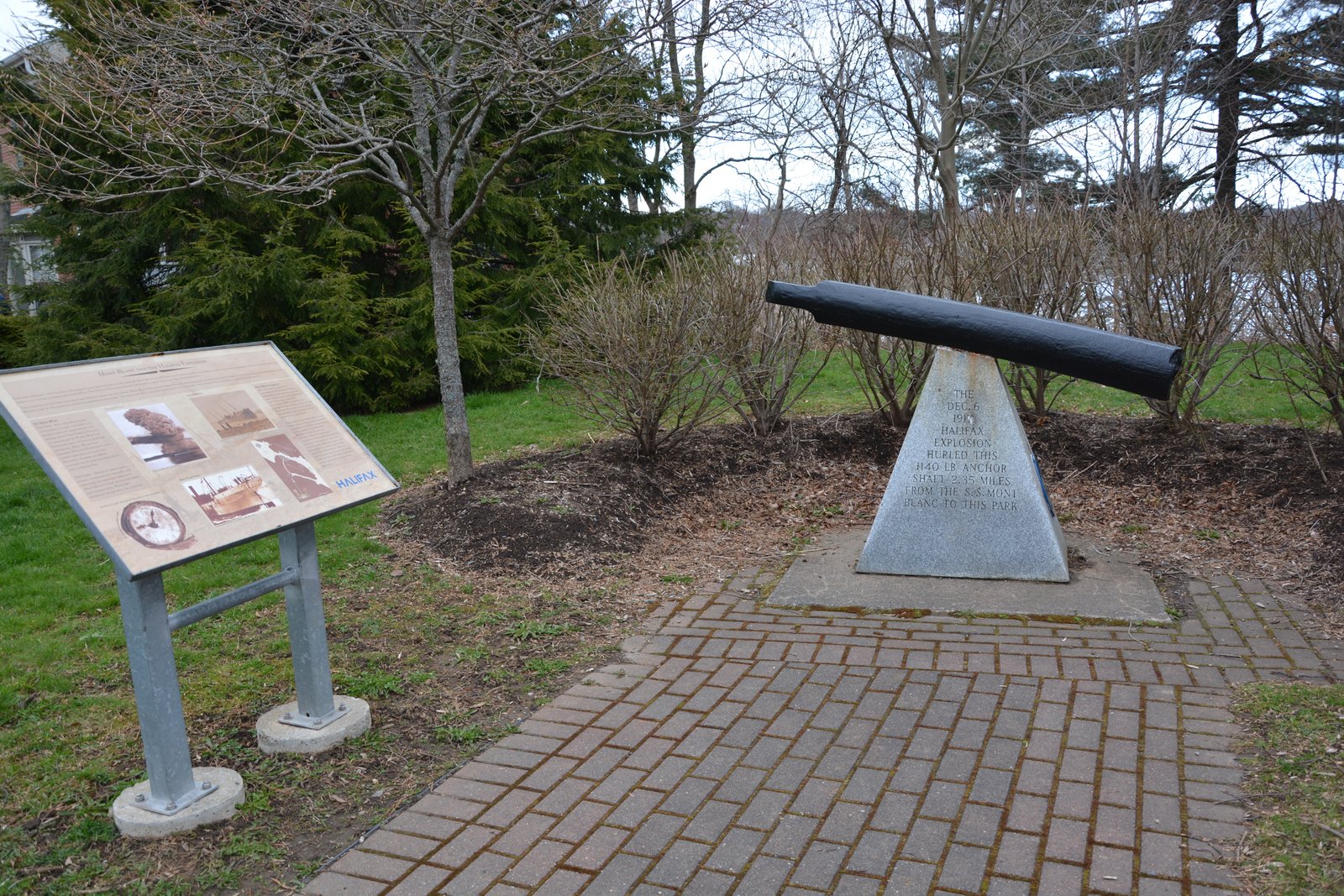
6. Mont Blanc Anchor site 110 Spinnaker Dr, Halifax, NS B3N3B9
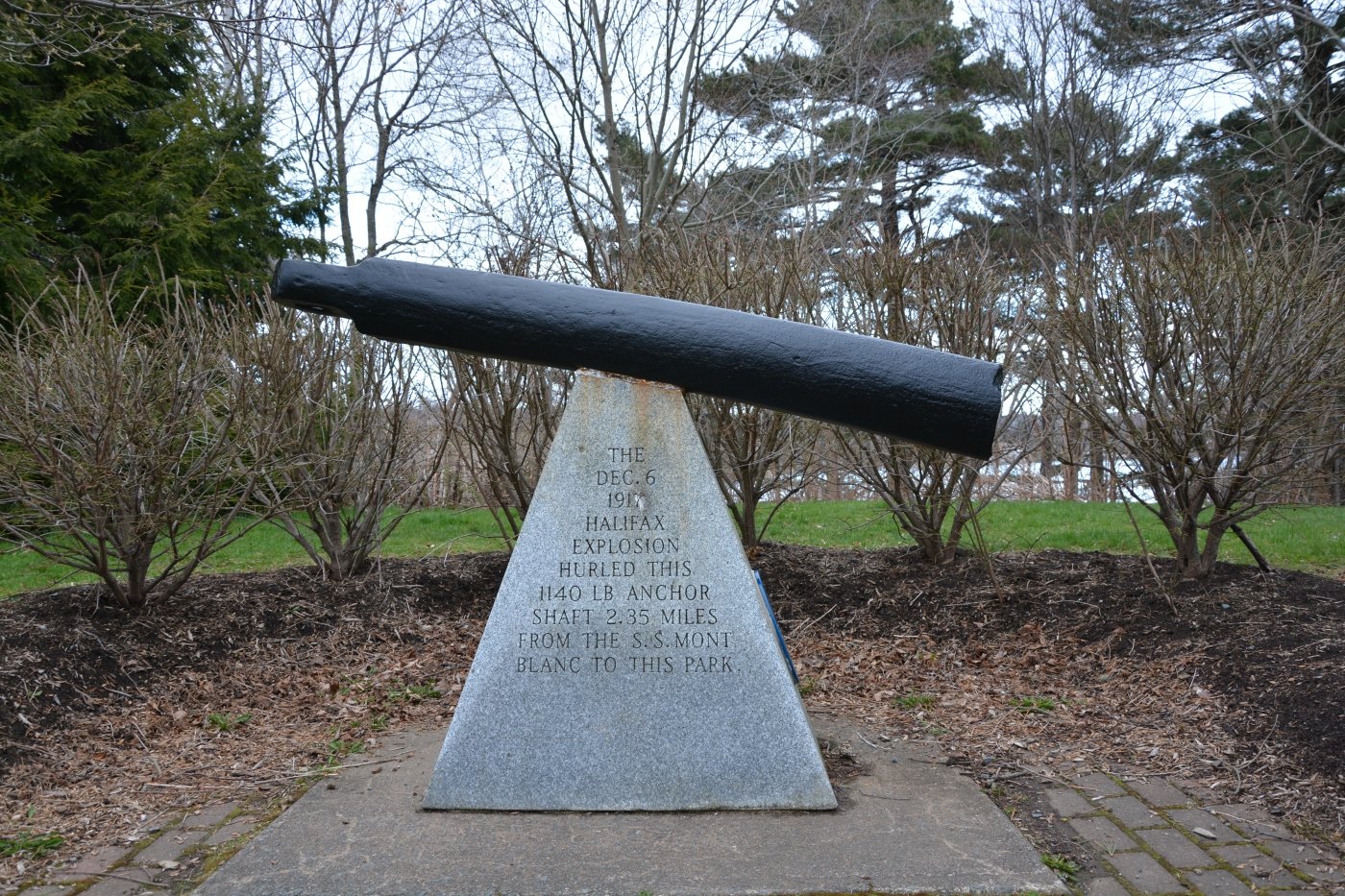
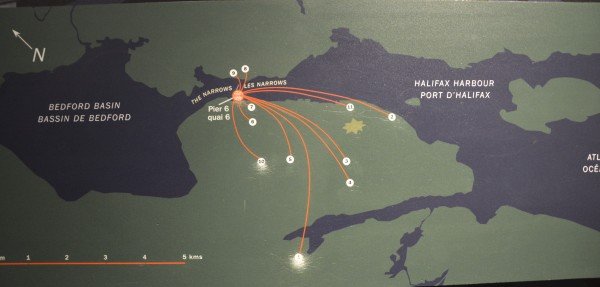
I remember my dad taking me here as a child. I’m glad I returned to this location, it means more to me now as an adult. The anchor block is engraved with these words; The December 6th 1917 Halifax Explosion Hurled this 1140 Lb Anchor shaft 2.35 Miles from the S.S. Mont Blanc to this park. I have a hard time wrapping my head around the force it took to toss this item overland an astounding 3.8 kilometers from where the Mont Blanc exploded.
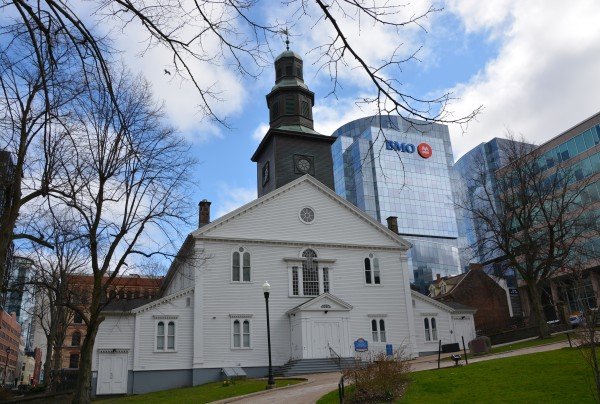
7. Saint Paul’s Church 1749 Argyle Street
Halifax, NS, Canada
A spike went through the wall inside the the church. It is not visible in this photo but it is supposedly visible inside the vestibule. I didn’t go in the church.
8. Mont Blanc Cannon.- 171 Albro lake street Dartmouth . I can’t find my picture, sorry. One of the three parts of the Mont Blanc that have been left where they were found as memorials to the day.
9. Citadel Hill. A Note Book plaque. Dedication to the book Barometer Rising. Sorry no photo but worth a look especially if you have read the book.
10. Some where on the Eastern Shore of the Falkland Islands. is the final resting place of the S.S. IMO aka Guvernoren. This ship had more lives than a cat. Originally christened the Runic as a livestock carrier, she was bought and sold renamed the Tampican as whaling factory. Leased as a war relief ship under the name SS IMO, she was heavily damaged in the blast but was rebuilt renamed the Guvernoren and returned to being a whale oil tanker. She was wrecked off the Falklands on November 30th 1921. If money was no object, I would go down to the Falklands and find her. If anyone has been there and seen her wreckage let me know, maybe I will get a windfall and be able to go see her one day.
My father would have been six years old when the Halifax explosion happened and whether he actually remembered the windows shaking, or heard about it from others at a later date, I will never know but I believed him.
Thanks for reading happy travels from Maritime Mac.
No gifts grants or money was received for this post it is all my own experience.
references;
1.warmusemu.ca. 2.maritimemuseum.novascotia.ca 3. thecanadianencyclopedia.ca 4. CNIB.ca 5. CBC.ca
Contribution
If you enjoyed this post and found it helpful, you can make a contribution to ensure the continuation of this blog.
CA$2.00

 MaritimeMac
Oh dear such a horrible tragedy. Well done putting together the research to share this piece with us Kelly. I love historical stuff. ðŸ™?💙
LikeLiked by 2 people
Thank you. I’m really happy to finally write this, I wanted to for years but like my titanic posts, because they were such tragedies, my approach to them had to be done with empathy, accuracy but still in my blog style of exploring. I appreciate you reading it. Be well.
LikeLike
A great piece, Kelly! Hard to imagine such events - your family connection and vivid descriptions really told the tale from a properly human perspective and not “justâ€? an historical event. As an aside, never read any Hugh MacLennan and although the work you mentioned isn’t currently available, I have another by him on hold with the library.
Thanks, and have a great day!
LikeLiked by 1 person
Thank you so much. Let me know how the book is.
LikeLike
Wow, Kelly, I have never heard about this tragedy until this moment. Very sad. The explosive force to toss that barrel so far had to have been massive! How could the ships have run into each other? 😔
LikeLiked by 1 person
If you ever watch the Boston news, they show the Christmas tree, it’s from NS when they light it.
Good question how did the ships collide? I’ve read how it happened, misunderstood signal from one ship to the other, and she a last minute decision by the IMO. It’s hard to understand living in modern times and technology.
LikeLiked by 1 person
I’ve never been to Boston, the whole thing is very sad, Kelly. I’m glad that our countries work together, especially for things like this. 🇨🇦🇺🇸â?¤ï¸?
LikeLiked by 1 person
Me too John ✋ï¸? 🇨🇦🇺🇸.
Nova Scotia and Boston for sure, have a special relationship. Cheers friend, I always appreciate your comments. I’ll return to Las Vegas one if these days
LikeLiked by 1 person
I hope you visit Las Vegas, I would love to buy you breakfast, lunch, or dinner, Kelly!
LikeLiked by 1 person
I only have one trip planned for next year so far..costa rica in May but who knows were else ill end up. Cheers
LikeLiked by 1 person
Enjoy that trip, it’s nice and warm down there I’m sure. 😊
LikeLiked by 1 person
Every year, the local TV stations here in Boston always tell this story just before the public lighting of the Nova Scotia Christmas tree.
LikeLiked by 1 person
Yes!! I’m glad you know about it. Thank you for commenting.
LikeLiked by 1 person
Kelly, I’ve read several blog posts and accounts of this major incident before, but this is the most readable and informative that I’ve come across. Excellent read.
LikeLiked by 1 person
Oh, I’m so humbled by your words. Thank you so much. Thank you for reading and commenting. I hope you have a wonderful day.
LikeLiked by 1 person
On a Nova Scotia, I stood on Citadel Hill overlooking the harbor where this disaster took place and expanded my interest on its impact during WWI in 1917. Thanks for sharing this memory.
LikeLiked by 1 person
Oh, wonder you were here.
LikeLike